Taylor Berger · 4 October 2026
Tracing Adaptive Niche Alignment Protocols Within Fragmented Creator Supply Chains
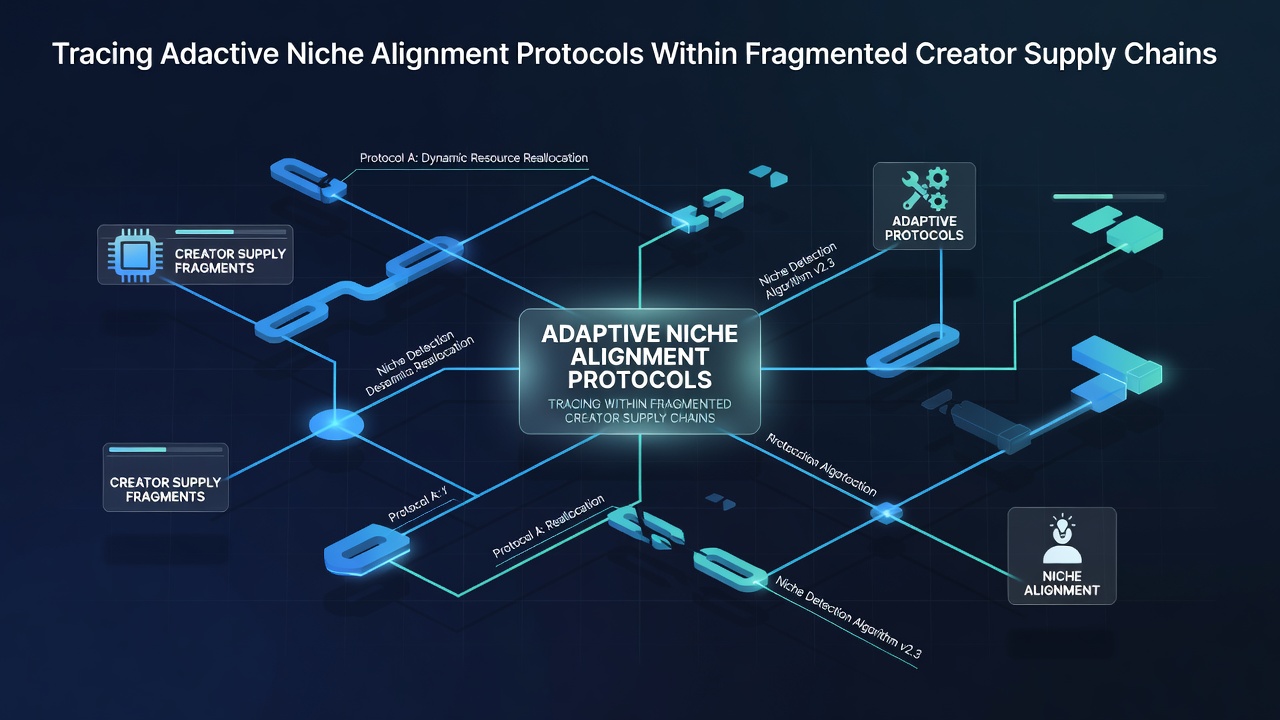
Creator supply chains operate across multiple disconnected platforms, payment processors, content hosts, and audience analytics tools, and tracing adaptive niche alignment protocols requires mapping how these elements adjust in real time to match specific audience segments. Observers note that protocols emerge when creators collect performance data from separate sources and feed it into decision frameworks that reposition content themes without central coordination. Research from digital economy studies indicates these adjustments occur through iterative testing cycles that identify profitable sub-niches within larger categories such as short-form video, newsletter subscriptions, and live-stream commerce.
Core Components of Alignment Protocols
Data aggregation layers pull metrics from video platforms, social networks, and e-commerce storefronts, then normalize the figures so creators can compare engagement rates across channels. Alignment protocols use these normalized datasets to shift topic focus, posting schedules, and collaboration patterns while the underlying infrastructure remains fragmented. Studies from academic institutions show that successful protocols incorporate feedback loops lasting between 72 hours and two weeks, allowing rapid recalibration before audience interest drifts. Those who have examined these systems report that the protocols rarely rely on single-platform algorithms and instead combine signals from at least three distinct data streams to reduce the impact of any one platform's policy change.
Mapping Fragmentation Points
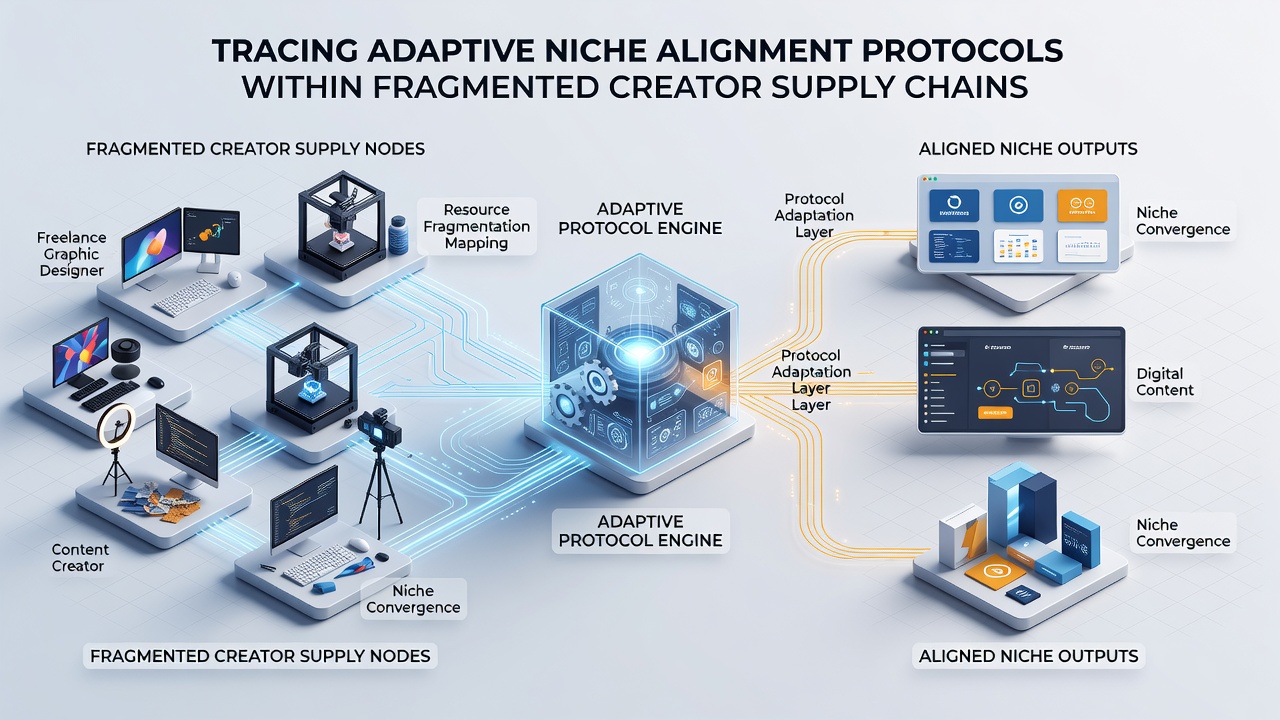
Supply chain fragmentation appears at the intersection of content production tools, distribution networks, monetization gateways, and audience measurement services. Each segment maintains independent APIs and data formats, which forces alignment protocols to include translation steps that convert raw numbers into comparable indicators. In October 2026 several platform updates altered video recommendation thresholds, prompting creators to activate secondary alignment layers that rerouted traffic toward newsletter and community features. Figures from industry reports reveal that creators who maintained three or more active distribution points experienced smaller revenue drops during these updates compared with single-channel operators. European Commission documentation on digital platform interoperability highlights how such multi-point strategies help stabilize income when individual services modify their terms.
Protocol Implementation Patterns
Creators begin by establishing baseline niche definitions derived from historical performance data, then introduce controlled variations in content framing or format. Adaptive protocols track conversion metrics at each variation point and automatically deprioritize underperforming branches. Research indicates that the most consistent results come from protocols that segment audiences by behavioral clusters rather than demographic categories alone. One documented case involved a creator collective that integrated Australian Competition and Consumer Commission guidelines on transparent advertising into their alignment checks, ensuring new niche directions complied with disclosure requirements before scaling spend. The process relies on scripted queries that pull data nightly and feed outputs into simple decision trees, avoiding complex machine-learning models that demand continuous maintenance across fragmented systems.
Measurement and Verification Methods
Verification occurs through cross-referencing revenue reports from payment processors against engagement logs from content hosts. Discrepancies trigger protocol reviews that isolate whether the mismatch stems from audience drift, platform policy shifts, or data formatting errors. Data from multiple regions shows that creators who run weekly verification cycles maintain higher alignment accuracy over six-month periods. Observers note that verification scripts often incorporate time-stamped snapshots so that later audits can reconstruct the exact conditions under which a niche shift was approved. This documentation practice supports compliance reviews and helps creators demonstrate that adjustments followed measurable criteria rather than subjective preference.
External Influences on Protocol Evolution
Regulatory changes, platform policy updates, and shifts in consumer device usage patterns all exert pressure on alignment protocols. When new rules emerge, creators insert compliance checks into existing decision trees without rebuilding the entire framework. Industry analyses from the OECD digital economy papers describe how such modular additions allow protocols to absorb external shocks while preserving core niche-matching logic. In practice, this means a creator can add a disclosure requirement or age-gating step to a content branch within days rather than weeks. The modular structure also supports geographic expansion, since regional compliance modules can activate only for audiences in affected jurisdictions.
Conclusion
Tracing adaptive niche alignment protocols within fragmented creator supply chains reveals a system built on distributed data sources, modular decision rules, and repeated verification cycles. The approach accommodates ongoing platform changes and regulatory developments while maintaining focus on measurable audience response. Continued observation of these protocols shows steady refinement through incremental additions rather than wholesale replacement of existing structures.